I love saisons. What I never did was nail down the yeast.
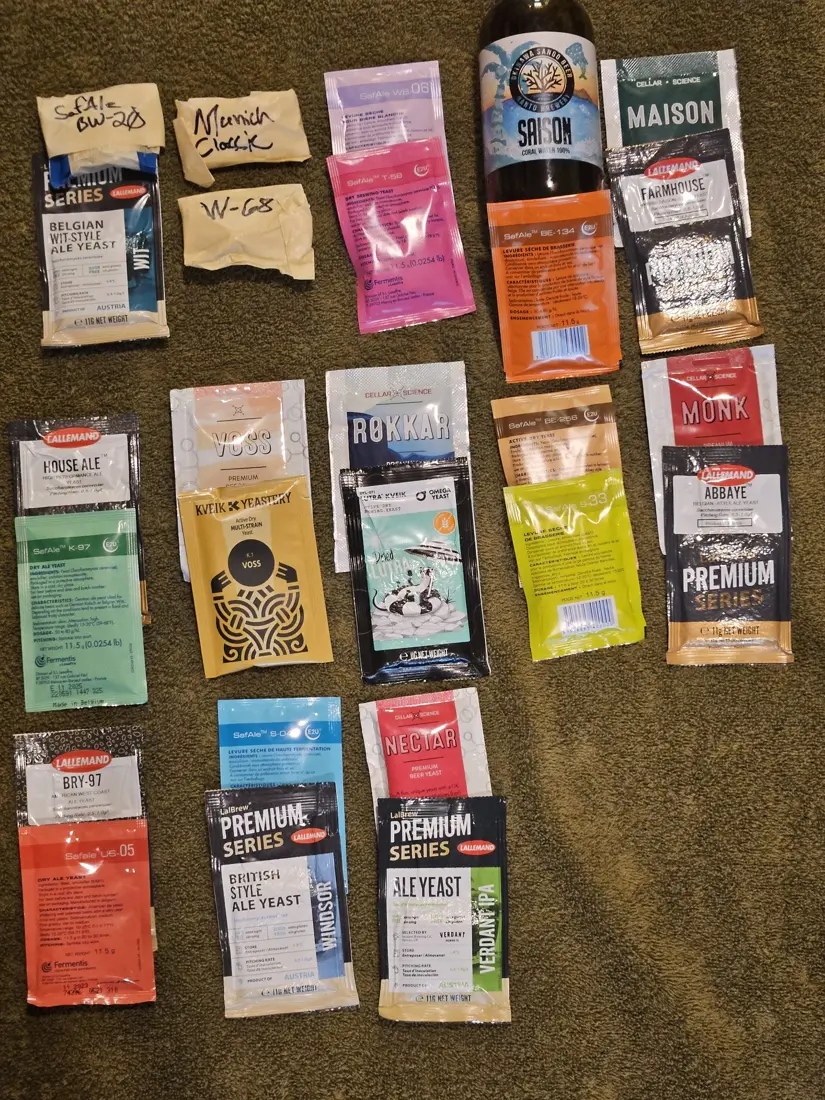
I’ve brewed saison-style beers I liked, but not one where I could point at the yeast and say: that’s the one. So instead of guessing, I built a series of trials around twenty-six yeasts I already own, organized into six categories. Lose your pairing and you’re out. Each category’s initial pairings share one recipe; their winners meet on a new recipe built for the category final. I taste the beers blind and unscored first, then return for a scored tasting knowing which yeast is which. The higher-scoring beer earns its yeast a place in the next round.
And not just saison yeasts. I’m starting with Sunrise Saison in the wheat category, but the wider search includes Belgian ale strains, kveik (Norwegian farmhouse yeasts that ferment happily at warm temperatures), clean ale benchmarks, and English and fruity wild cards. I want to find out what each can bring to the saison I’m chasing.
This post is the map of the whole project: the rules, the categories, every pairing, and what the winner gets. Each individual trial gets its own post with the full data. This page is where the series ties together, and I’ll add each result here after its trial article is published.
Which saison yeast is best?
I don’t know yet — that’s what the trials are for. The Saison Yeast Trials compare 26 yeasts in 13 head-to-head pairings across 6 categories to find one go-to saison yeast. Each pairing is tasted blind first, then scored out of 100, and the grand-final winner takes the title. Until the trials run, “best” is a guess — this series is how I stop guessing.
The trials at a glance
| The recipes | Sunrise Saison for the initial Wheat & Phenolic pairings; a new purpose-built recipe for each category final (Yuzu Saison for Wheat & Phenolic). One common recipe for the grand final. |
|---|---|
| The field | 26 yeasts, 13 pairings, 6 categories |
| The format | Initial trials: one batch split in two, with conditions matched as closely as practical |
| The scoring | 100 points; blind and unscored first, then scored with identities known |
| The stakes | Lose your pairing and you’re out of the experiment |
| The prize | The overall winner becomes my go-to saison yeast |
The beer I’m chasing
Sunrise Saison is the recipe for the Wheat & Phenolic category’s initial pairings: a pilsner and two-row base with white wheat, a little Munich and amber malt, flaked oats, and dextrose (a simple sugar that ferments out fully) to keep it dry, with orange peel and coriander at flameout (just after the heat is turned off). What I want out of it is an island version of a saison — definite citrus, more tropical fruit, and that phenolic yeast character — the peppery, spicy notes certain yeasts produce — over the top.
That direction guides the series, while recipe fit is judged against the recipe and flavor target for the current round. Each category keeps one recipe across its initial pairings, then uses a new, purpose-built recipe for its final. Every yeast in a direct comparison gets the same recipe. A yeast can make a good beer and still lose here because it isn’t my preferred fit for that particular beer.
How does a trial work?
Within each pairing, I match the conditions as closely as I can. The yeast is the variable I deliberately change, and I record any differences or interruptions — including which fermenter each yeast goes into:
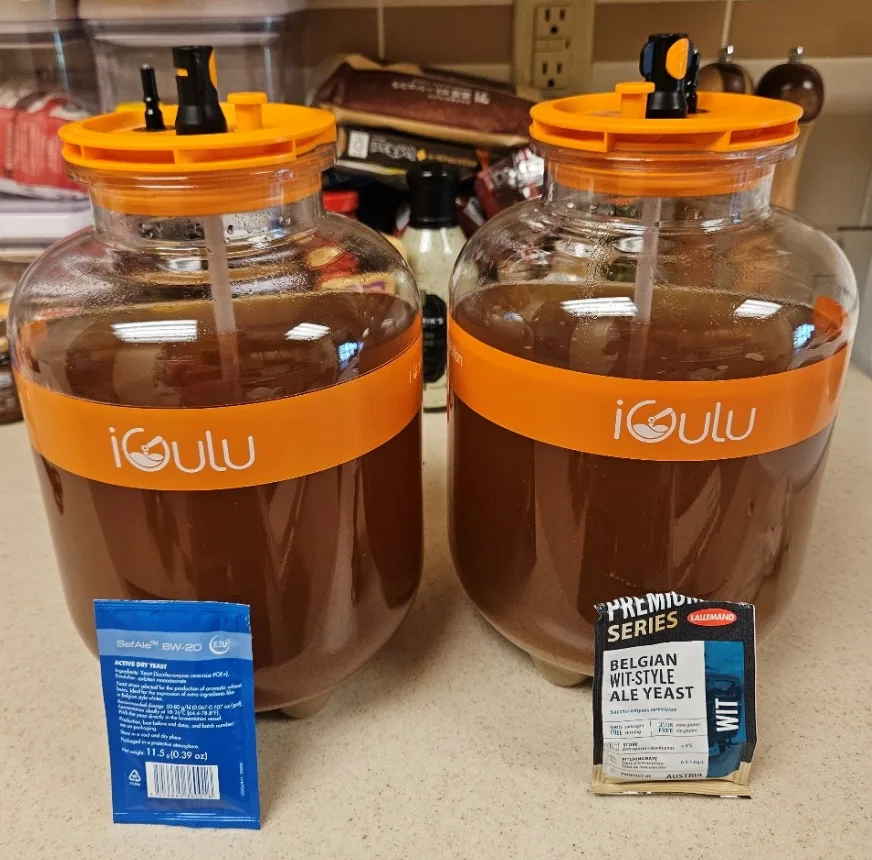
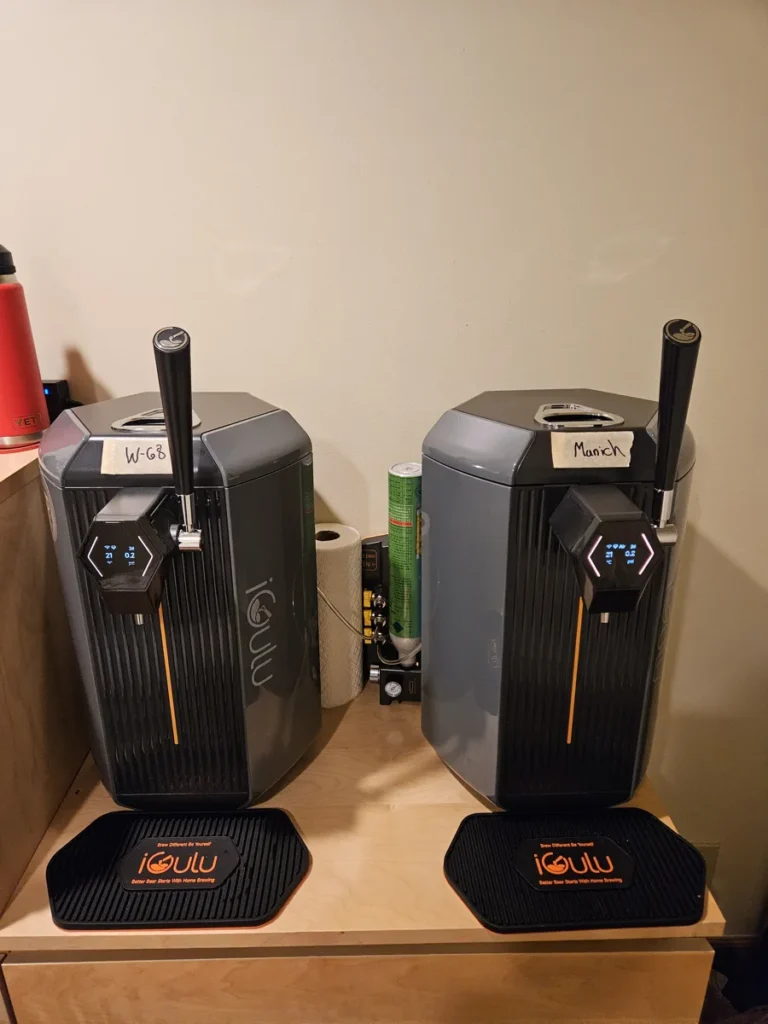
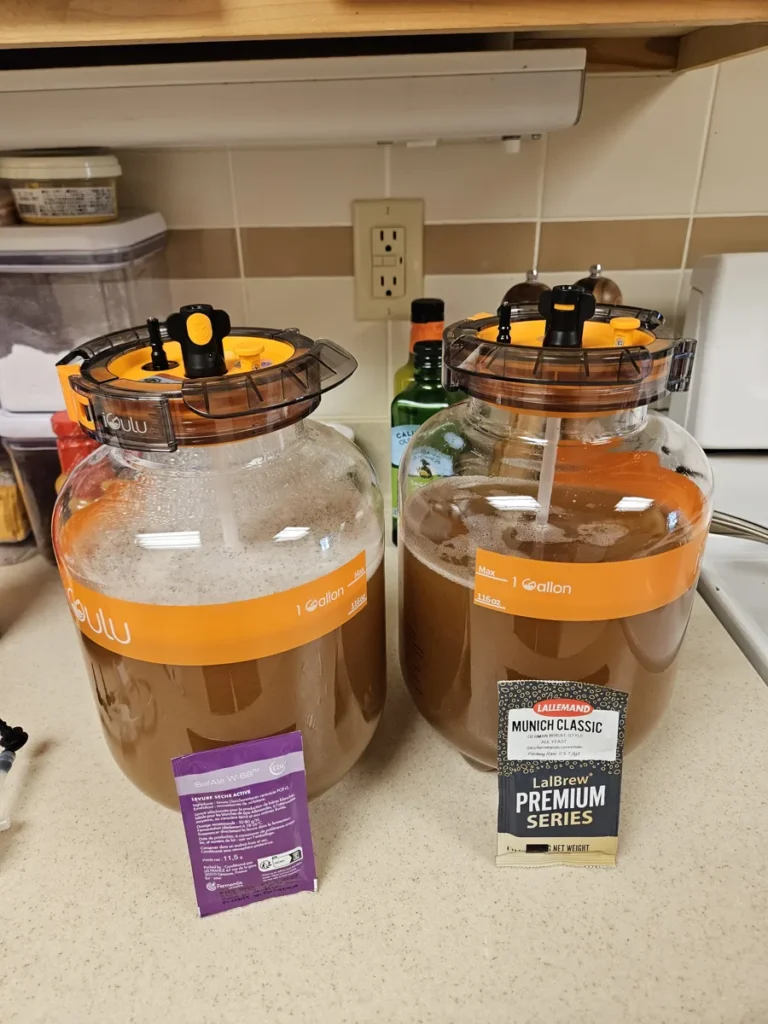
- One wort, split. Each initial trial is a single small stovetop batch of wort (the sweet liquid that becomes beer once the yeast ferments it) — about 8 L (2.1 US gal) of the recipe for that category — split into two fermenters, iGulu S1s (countertop machines that brew, ferment, chill, and dispense a gallon (3.8 L) at a time) for most trials, at about 4 L (1.06 US gal) each. Sunrise Saison is used for the three wheat-category pairings.
- Same weighed dry dose. For the dry-yeast pairings, the planned dose is 2.75 g (1/4 of a packet) per half, weighed and pitched (added to the wort) directly. Same weight doesn’t mean the same number of live cells, but it’s the fairest simple rule I’ve got. The exception is the culture I grew from bottles of Sango Saison, which is prepared separately and pitched as a liquid slurry (yeast mixed into liquid) measured by volume — I can’t know its true cell count, so I estimate from the volume and err on the high side rather than underpitch it, and the volume gets recorded in that trial’s post.
- Same temperature — within the pairing. I set both fermenters to the same temperature profile. That profile is chosen for the pairing, so temperatures vary across the series: the wheat pairings run cooler than the kveik pairings. This tests the yeasts under shared conditions, rather than finding the ideal temperature for each strain. Pressure settings and any interventions will be recorded in the individual trial posts.
- Blind first, scored second. I taste the two beers blind and unscored first. At a later session, I taste again knowing which is which and score both. I do the regular tastings myself; a friend joins only to break a tie.
- One winner. The higher score advances. If my totals tie, a friend tastes the beers blind and picks which they prefer for that round’s recipe and flavor target. I record their choice separately and keep my scores unchanged. A loss only means that yeast didn’t advance in this comparison.
The 100-point rubric (the weights stay the same throughout the series):
Each beer is scored out of 100: flavor 30, recipe fit 25, aroma 20, mouthfeel and finish 15, overall impression 10.
| Category | Points | What it rewards |
|---|---|---|
| Aroma | 20 | Pepper and spice, citrus and fruit, and clean fermentation |
| Flavor | 30 | Dryness, peppery saison character, pleasant fruit, and balance |
| Mouthfeel & finish | 15 | Lively, crisp, refreshing, with a pleasant lingering spice or citrus |
| Recipe fit | 25 | Does this yeast suit the recipe and flavor target for this round — does the finished beer feel balanced, and like it belongs in this recipe? |
| Overall impression | 10 | Enjoyment. Do I want another glass? |
Recipe fit often decides a close pairing. Aroma and flavor tell me how a yeast performed; recipe fit tells me whether it belongs in this beer.
The six categories
The trials are numbered in the order they’re brewed, continuously across the whole series. Before each category starts, I post the pairings I’ve selected on Instagram, and the audience votes on which pairing goes first — so beyond Wheat & Phenolic, the pairings below don’t have trial numbers yet. They earn their numbers when they’re brewed.
Temperature profiles below are the plan for each pairing, in °C with °F alongside. The final column tracks publication; I’ll add a link and result after each trial article goes live.
Category 1: Wheat & Phenolic (Trials #1–3)
| Trial | Pairing | Fermentation profile | Trial article |
|---|---|---|---|
| #1 | SafAle BW-20 vs LalBrew Wit Belgian | Start 20 °C (68 °F), ramp to 22–23 °C (72–73 °F), hold | BW-20 wins 55-52 |
| #2 | SafAle W-68 vs LalBrew Munich Classic | Hold 20–21 °C (68–70 °F) | Not yet published |
| #3 | SafAle WB-06 vs SafAle T-58 | Start 20 °C (68 °F), ramp to 24 °C (75 °F) over 2 days, hold | Not yet published |
These three pairings make up the first category. I selected the matchups, and Instagram voters chose BW-20 versus Wit to go first. The orange peel and coriander in Sunrise Saison also made me curious about how these strains would handle its citrus-and-spice character.
Category 2: Saison & Farmhouse
| Pairing | Fermentation profile | Trial article |
|---|---|---|
| SafAle BE-134 vs Sango Saison culture | Start 20 °C (68 °F) for 24 hours, ramp to 25–26 °C (77–79 °F) over 2–3 days, hold | Not yet published |
| LalBrew Farmhouse vs CellarScience Maison | Start 21–22 °C (70–72 °F), ramp to 25 °C (77 °F) over 2 days, hold | Not yet published |
This is the home category — saison and farmhouse yeasts. It also holds the series’ wild card: the Sango Saison culture, which I grew from bottles of Sango Saison, brewed by Nanto in Okinawa, Japan. BE-134 against that bottle-derived culture is the comparison I most want to see in this whole project. The trial will show how my culture performs. That doesn’t prove it’s Nanto’s house strain — it’s just what grew from the bottle.
Category 3: Belgian Ale
| Pairing | Fermentation profile | Trial article |
|---|---|---|
| CellarScience Monk vs LalBrew Abbaye | Start 19–20 °C (66–68 °F), ramp to 23 °C (73 °F), hold | Not yet published |
| SafAle BE-256 vs SafAle S-33 | Start 20 °C (68 °F), ramp to 22–23 °C (72–73 °F), hold | Not yet published |
I’m comparing how these Belgian-oriented strains handle fruit character, dryness, and body. The question is how those differences work in the recipe chosen for this category.
Category 4: Kveik
| Pairing | Fermentation profile | Trial article |
|---|---|---|
| CellarScience RØKKA vs Omega Lutra Kveik | Hold 28–32 °C (82–90 °F), heat-wrap control with insulation | Not yet published |
| CellarScience Voss vs Kveik Yeastery K.1 Voss | Hold 28–32 °C (82–90 °F), heat-wrap control with insulation | Not yet published |
I want to see what kveik does when it’s warm. One compares two strains selected for a cleaner profile, to see how they support the recipe’s malt, hops, and other ingredients. The other puts two Voss-derived cultures head to head, with citrus and orange-like fruit among the characters I’ll be looking for.
Category 5: Clean Ale Controls
| Pairing | Fermentation profile | Trial article |
|---|---|---|
| SafAle K-97 vs LalBrew House Ale | Hold 18–20 °C (64–68 °F) | Not yet published |
| SafAle US-05 vs LalBrew BRY-97 | Hold 18–20 °C (64–68 °F) | Not yet published |
These clean ale yeasts are benchmarks for a more restrained fermentation profile. I’m interested in how the category’s recipe tastes when the yeast contributes less aroma, and whether I enjoy that balance. They’re benchmarks, not a true control — they aren’t brewed next to every other trial, so their scores can’t isolate yeast effects across different recipes or brew days.
Category 6: English & Fruity Wildcards
| Pairing | Fermentation profile | Trial article |
|---|---|---|
| SafAle S-04 vs LalBrew Windsor | Hold 18–20 °C (64–68 °F), optionally rising to 20–21 °C (68–70 °F) for more fruit | Not yet published |
| CellarScience Nectar vs LalBrew Verdant IPA | Start 19–20 °C (66–68 °F), rise to 21–22 °C (70–72 °F) | Not yet published |
Here I’m putting English strains known for esters (the fruity aromas the yeast itself produces) and body alongside fruity ale yeasts used for hazy IPA. I’m curious whether those characters can take a beer in the fruity, farmhouse-adjacent direction I enjoy.
What happens after the pairings?
Winning a pairing isn’t the end — it just earns a yeast the next round.
The category finals. After the initial pairings, I’ll use what I learned from tasting the winners to build a new recipe for that category’s final. All pairing winners will then compete on that same recipe, with one batch split among them. For Wheat & Phenolic, that means the three winners move from Sunrise Saison to a purpose-built Yuzu Saison. The winner of that comparison becomes the category champion.
The grand final. Each category winner gets brewed as a full 19 L (5 US gal) batch using one common recipe for all finalists. Those beers get served blind to people I know and scored by more palates than just mine — after a series based mainly on my own tastings, the final decision gets a panel. The final recipe and the rest of the tasting details will be set before that round. The winner becomes my go-to saison yeast: the strain the definitive version of my saison gets built around.
The honest limits
This is one brewer, one small batch per pairing, and one palate for almost every score in the series — a win here is my preference, not a lab result. With one batch per pairing there’s no way to measure batch-to-batch noise, so a win by a few points is a close call, not a measured difference. A yeast that loses here might be perfect in another recipe. The scored tastings aren’t blind, so knowing the identities may influence my judgment. I match conditions within each pairing and record what actually happened. And because recipes and temperature profiles vary across categories, rounds, and pairings, scores from separate trials aren’t a controlled ranking of all 26 yeasts. The grand final also uses separate brews of a common recipe, so batch-to-batch variation is in there too.
Follow along
The first trial post will cover SafAle BW-20 versus LalBrew Wit Belgian. Each trial article will tell the brew-day story, share the tasting notes and scores, and explain which yeast advances.
The pairings for each category get posted on Instagram @alechemylab before brewing. Suggestions for future pairings are welcome in the comments — the roster above is yeast I already own, but a later round built from reader suggestions isn’t off the table.
So, opening question for the whole series: of the 26 yeasts on this list, which one would you bet on to win it all?
New to the Lab? Start with the Welcome post — and every trial post as it lands will be linked from the tables above.