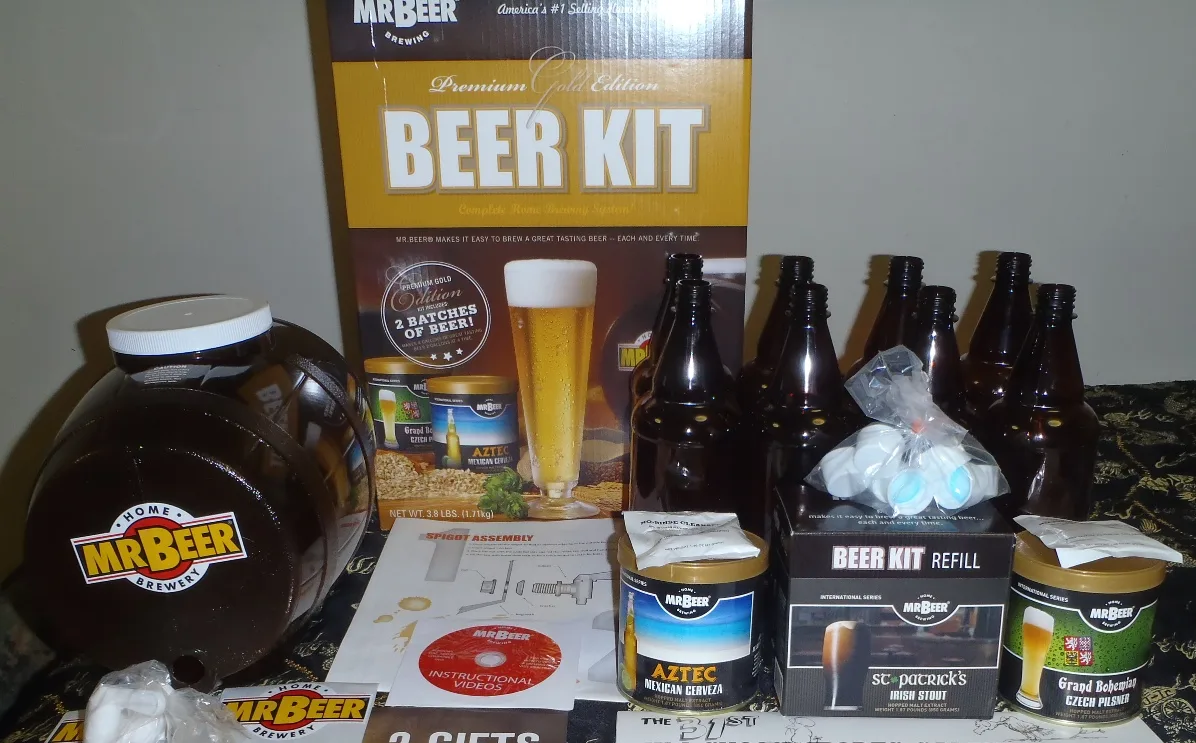
From a Christmas Mr. Beer kit to 26 yeasts, head-to-head.
It started with a Christmas gift and a little brown fermenter.
Alechemy Lab is my homebrewing blog — recipes, experiments, brew days, and the questions behind them — written by a homebrewer currently brewing in Asia. The biggest project here is the Saison Yeast Trials: saison is a dry, peppery Belgian-style ale, and I’m running 26 yeasts head-to-head on one recipe to find my go-to. Start there.
If you’ve never brewed, you’re welcome here too — I explain things as they come up.
From a Christmas kit to all-grain
I brewed my first beer in 2012 with a Mr. Beer kit I got for Christmas. It came with a Czech Pilsner and a Mexican Cerveza, and I was gifted an Irish stout kit too.
Small batches, canned hopped malt extract — a ready-made malt syrup with the hops already in it, which is what the kits are built on — and a simple setup. I brewed the first one and was hooked immediately.
By my second batch, I’d already figured out I needed to control fermentation temperatures — yeast makes harsh flavors when it ferments too warm. I put the little brown fermenter in a cooler and started swapping frozen water bottles in and out. Temperature control on batch two.
By batch three, the Irish stout, I was toasting flaked oats and steeping them — soaking them in hot water — before mixing in the extract.
Already off the script.
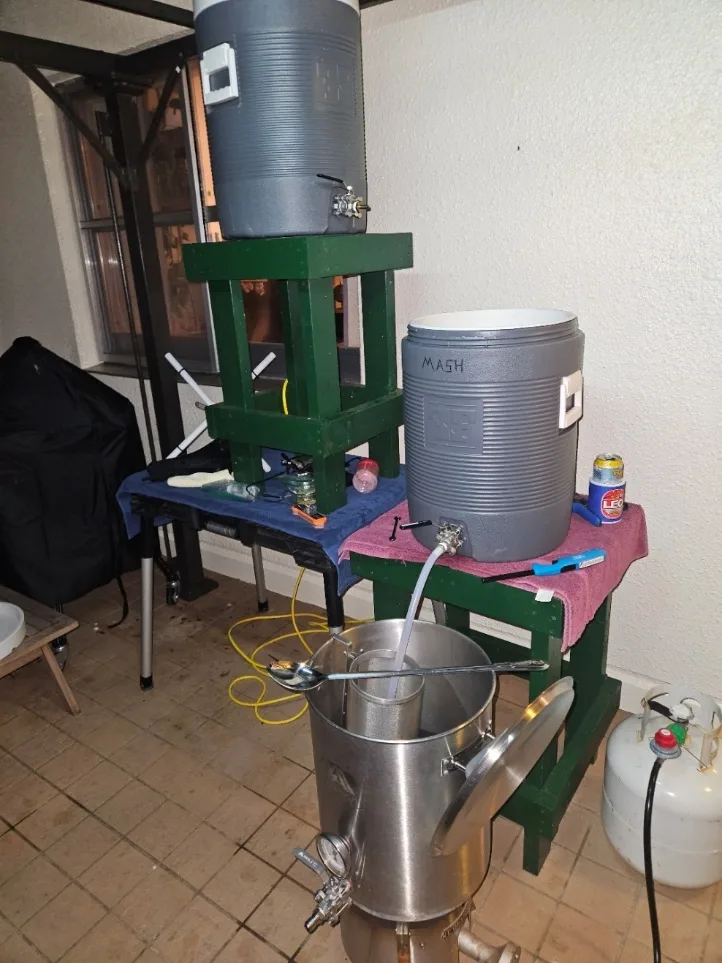
I spent about a year in the barracks brewing more Mr. Beer kits. Then I moved into a house and switched to extract brewing with steeping grains — still working from malt extract, but steeping specialty grains in hot water first for color and flavor. About a year later, I was brewing all-grain — making the wort from crushed grain instead of extract — with a pair of coolers and a stainless-steel kettle over a propane burner.
Two years from a Christmas kit to all-grain. That’s what this hobby does to you.
You don’t have to move that fast, and you don’t need the gear. You don’t have to move in this order, or this slowly, either. Go at your own pace. The kit beer was worth drinking all on its own.
Why “Alechemy Lab”
Ale, obviously, plus alchemy. Water, grain, hops, and yeast go in; beer comes out. That transformation is a big part of what keeps brewing interesting to me.
And Lab, because I can’t leave a recipe alone.
What happens if I use a different yeast? Change the fermentation temperature? Keep the recipe but adjust the process?
I want to know what actually changes in the glass. The Lab is where I work through those questions and keep the notes. I started this blog in 2026 to keep all of it in one place.
What’s brewing: the Saison Yeast Trials
One ongoing project is the Saison Yeast Trials. The Saison Yeast Trials compare 26 yeasts in 13 head-to-head pairings across 6 categories to find one go-to saison yeast. The trials start with my Sunrise Saison recipe: I change the yeast, taste what it does to the beer, and decide which version I’d most want to brew again. Pairing winners advance to category finals on a different wort, and the category winners meet in a grand final — full 5-gallon (19 L) batches, scored blind by a panel.
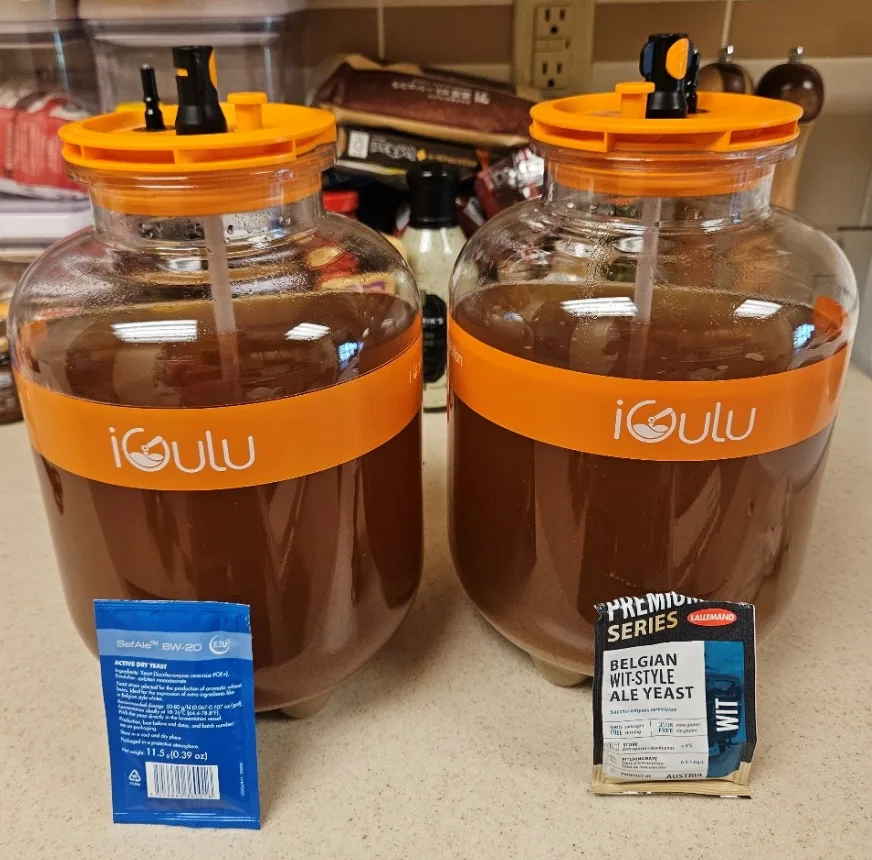
For the initial pairings, I split one wort — the liquid that becomes beer — between two fermenters, pitch (add) a different yeast in each, and hold both to the same temperature profile. Only the yeast changes. Then I record what happened and taste the beers side by side — blind first, then scored on a 100-point rubric.
Each post gets the recipe, the fermentation notes, and the tasting results — plus what I preferred, and why.
My main system is the Anvil Foundry 10.5, an electric all-in-one brewing system with a 10.5-gallon (40 L) capacity — it mashes (steeps the crushed grain in hot water to make the wort) and boils in a single vessel. I ferment in a mini fridge fitted with a temperature controller — the grown-up version of the cooler and frozen water bottles. I also keep a small-batch stovetop setup and two iGulu S1s for small experiments — countertop machines I use to ferment, chill, and dispense batches of about a gallon (3.8 L) at a time. The yeast trials’ initial pairings run in those.
What you’ll find here: recipes, brew days and a How to Brew series
Instagram is where I post the day-to-day from the Lab. This blog gives me room to work through the details: why I chose a recipe, what happened on brew day, what changed during fermentation, and how the beer tasted.
New to brewing? The basics get explained as they come up — including the unglamorous things that matter once you’ve mixed the ingredients and put the fermenter away. I’m also writing a How to Brew series — the walkthrough I wish I’d had in 2012.
Been brewing a while? You get the yeast comparisons, the process experiments, and the equipment notes. Recipes come with the reasoning behind them and notes on what I’d change next time. For an example, start with Gilded Roast, my coffee blonde ale — brewed in September 2026, with whole coffee beans added to the keg.
I’ll share what worked, what didn’t, and where I’m still unsure.
Beer travels, too
I travel often, and exploring beer is part of that. Alongside the brewing posts, I’ll share brewery visits, beer discoveries, and tasting notes from the places I go.
Those posts are about the beer, the people making it, and where I drank it.
If you’re looking for a first project to follow, start with the Saison Yeast Trials. Each trial post has the method, the data, and what I tasted. I’m running them to work out what I want from the next batch. Welcome to the Lab. Next: the Saison Yeast Trials — how the experiment works, and where it’s headed.